There's a version of you that starts every day knowing exactly how last night went, what needs attention before lunch, and which of the three small fires actually matters. That version of you currently requires forty-five minutes of tapping through a POS back office, a reviews tab, a reservations app, and a delivery dashboard — which is why most mornings, that version of you doesn't exist. You skim the sales total, you mean to check the rest, and service starts.
The data was never the problem. Your POS knows everything. The problem is that 'everything' arrives as eleven screens of tables, and nobody narrates it. That's the job we gave Dash.
What is a daily restaurant brief?
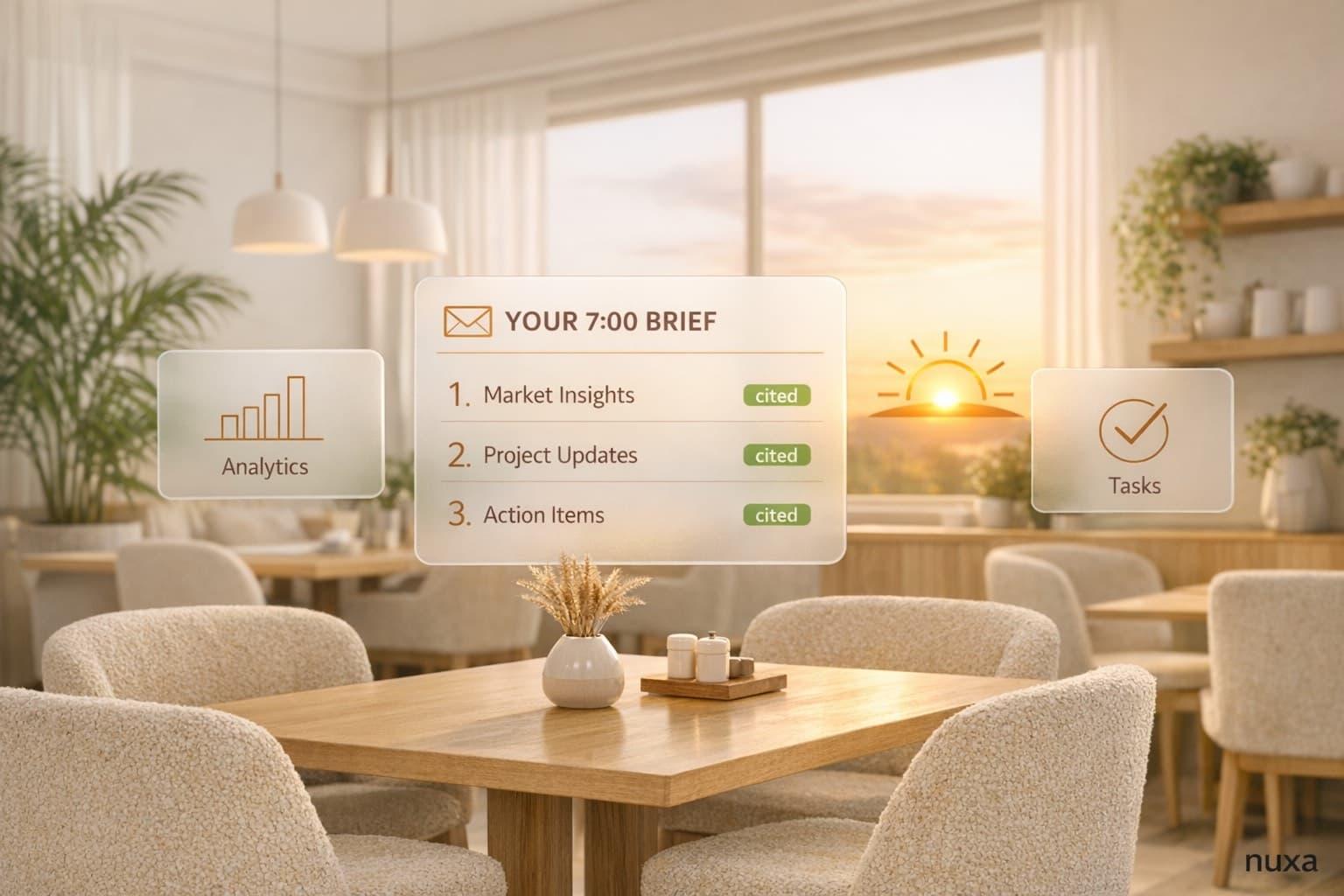
Every morning at 7am, Dash — Nuxa's operations employee — delivers one short, ranked read: what happened yesterday, what's unusual, and what to do about it. Not a dashboard you interrogate; a brief that's already done the interrogating. Revenue against your own baselines for that weekday. The dishes that over- or under-performed. The review that came in overnight, with Grace's reply already drafted. The reservation pattern that suggests Friday will run heavy. Ranked items, citation chips, approve buttons — the whole thing reads in the time it takes to drink a third of your coffee. You can see the format at nuxa.ai/daily-brief.
What does the brief actually pull from?
- Your POS — item-level sales, ticket sizes, voids and comps, time-of-day buckets. Connecting directly to the POS you already run means this is a direct read, not a nightly CSV import.
- Reviews — anything new on Google overnight, with sentiment, the matching order when one exists, and a cited draft reply queued for your approval.
- Reservations and orders ahead — today's covers against the usual, large parties flagged, pickup pre-orders that change prep.
- Your own history — every 'spike' or 'dip' is measured against your restaurant's baselines for that weekday and season, not a generic benchmark.
How do I know the numbers in the brief are right?
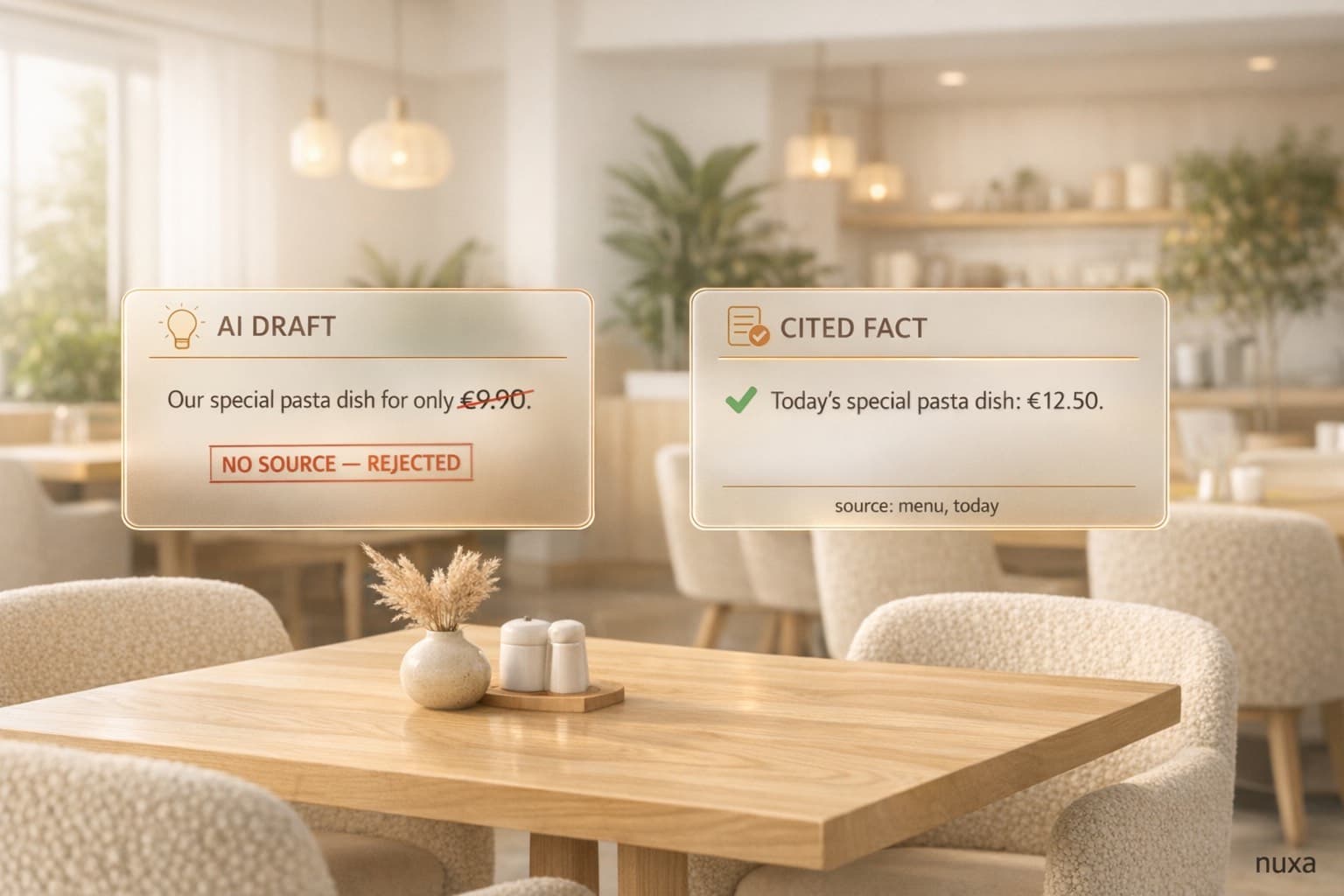
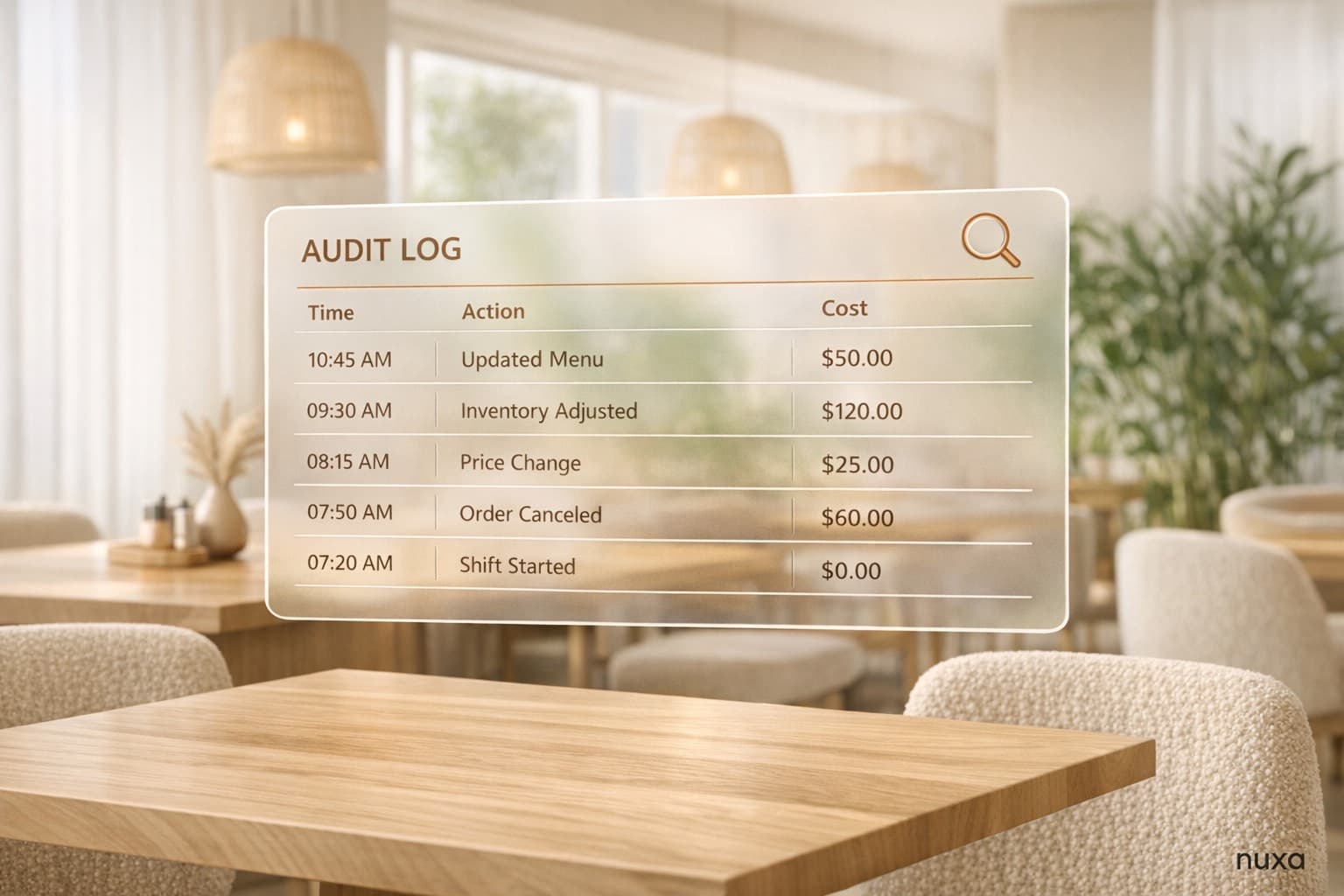
This is where the brief differs from every 'AI summary' feature bolted onto a dashboard. Dash operates under cite-or-die: every fact in the brief is a claim linked to its source, and a sentence that can't cite gets rejected before the brief is assembled. 'Tuesday dinner ran 18% over baseline' carries chips pointing at the actual order rows. Tap one and you're looking at the data. You'll check the citations the first week. After that, you'll trust the brief precisely because you know the checker never sleeps — uncited numbers don't survive to 7am.
A dashboard answers questions you remember to ask. A brief answers the questions you would have asked if you'd had an analyst staring at your numbers all night. The second one is what owners actually need at 7am.
Can the brief take action, or just inform?
Both — with the line drawn exactly where it should be. Analysis and ranking happen automatically. Anything public, financial, or irreversible arrives as a pending approval inside the brief: Grace's reply to last night's three-star sits there with the customer's order cited, waiting for one tap. You approve, it posts; you tweak, it learns. Nothing crosses the approval line on its own — the brief is where your AI team reports for the morning standup and asks for sign-offs, not where it acts behind your back. (The full rules live at nuxa.ai/trust.)
What changes after a month of briefs?
Owners tell us the compounding effect sneaks up on them. Week one, the brief saves the morning dashboard tour. Week three, it catches the thing you'd have missed — the quietly declining dessert attach rate, the delivery platform whose fees crept up, the regular whose orders stopped. By week five, your menu and staffing conversations start from evidence instead of hunches, because every morning has been a small, cited briefing on your own business. Forty-five scattered minutes became three focused ones, and the three are better.
The brief is included in both plans at nuxa.ai/pricing, and it's deliberately the first thing new Nuxa restaurants get — before any AI writes a word in public, it proves itself by knowing your numbers cold. Tomorrow at 7am is the demo.